
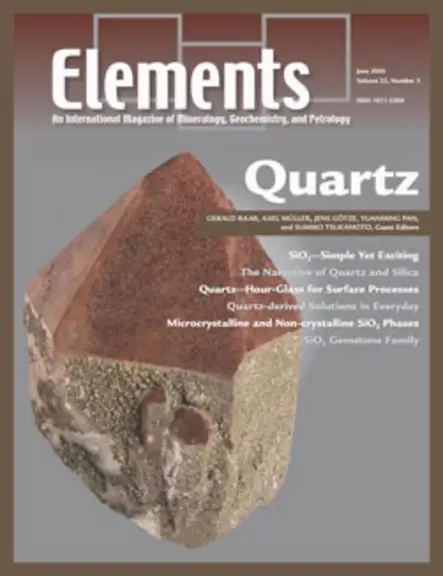
Silica (SiO2) is ubiquitous on Earth and has become integral to daily life. Although it has a simple chemical formula, the SiO2 system is very complex, with at least 15 known modifications, i.e., mineral phases with the same stoichiometric composition but different crystal structures. Quartz (trigonal, low-temperature α-quartz) is the most important silica polymorph in nature and occurs as a common constituent of magmatic, metamorphic, and sedimentary rocks. In modern industry, both single crystals and polycrystalline quartz materials are used, for example, as high-purity natural or synthetic quartz crystals, quartz sands, refractory materials, or as an ore for silicon metal crucial for photovoltaics, semiconductor, and steel production, and found in gyroscopes of satellites, special lenses, precision mirror substrates, and other high-tech equipment. This thematic issue of Elements provides a comprehensive overview of quartz occurrence and the silicate cycle, the role of quartz in the technological transformation of modern society, quartz and silica gemstones, and how quartz bears a wealth of genetic information that can serve as important mineralogical and geochemical indicators for geological and ore-forming processes.
Geochemical Society members can access this issue now via the Elements website using your email address (UserID) and member number (Password).